
Operational Intelligence — Real-Time Visibility for Any Operations-Driven Business
See where work is stuck, who is overloaded, and what is coming next—before it becomes a deadline problem. The same bottleneck, capacity, and forward-looking analytics apply across healthcare operations, legal, field service, and any team that runs on queues, cases, or workflow stages.
Every operations-driven organization fights the same three problems.
Work sits in hand-off queues without anyone noticing. Staff load creeps past healthy levels before a manager sees it. Leadership finds out about a bottleneck only after it has already delayed a client, patient, or case. Operational Intelligence is the discipline—and the AI-assisted analytics layer—that closes that gap, regardless of what industry generates the workflow.
Built on Three Core Pillars
Workflow Bottleneck Visibility
Most delay comes from waiting states, not the work itself. Operational Intelligence instruments queue age and hand-off latency by owner or team, so slowdowns surface while they are still small.
Capacity & Utilization Bands
Segmenting teams into healthy, constrained, and over-extended bands lets managers rebalance load before quality, throughput, or morale suffers—whether that team is billing hours, patient cases, or client matters.
Forward-Looking Operations
Leading indicators—volume mix, backlog age, hand-off latency—replace reactive firefighting with staffing and scheduling decisions made ahead of the constraint, not after it.
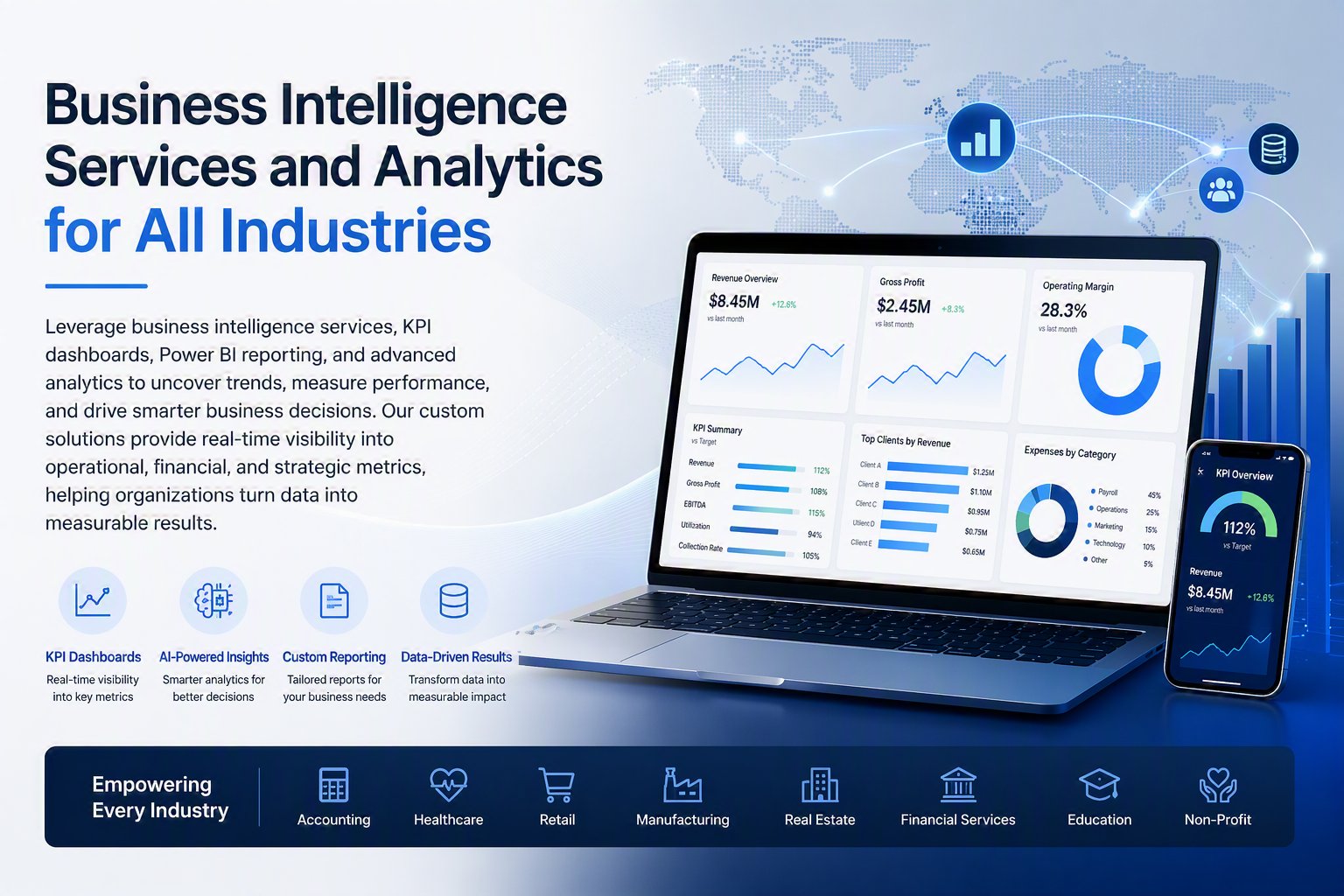
What Operational Intelligence Delivers
- Real-time queue, case, or job status visibility by stage and owner
- Staff capacity and utilization bands to guide rebalancing decisions
- Cycle-time and backlog-aging tracking to catch bottlenecks early
- AI-generated summaries that explain what changed and why
- Leading indicators for staffing and scheduling decisions
- A framework that adapts to your industry's workflow, not a generic template
Operational Intelligence Across Industries
Accounting & Bookkeeping Firms
- Client financial reporting
- Practice profitability dashboards
- Staff utilization metrics
See WorkSight Metrics™.
Professional Services
- Consulting firms
- Law firms
- Engineering firms
- Project profitability and billable-hours tracking
Construction & Contracting
- Job-costing dashboards
- WIP (Work in Progress) reporting
- Project margin analysis
Manufacturing
- Cost accounting
- Inventory valuation
- Production and profitability analytics
Distribution & Wholesale
- Margins by product/customer
- Inventory turnover
- Revenue forecasting
Retail & eCommerce
- Sales performance
- Gross margin analysis
- Multi-store or multi-channel reporting
Healthcare Practices
- Revenue cycle dashboards
- Provider productivity
- Financial performance monitoring
Real Estate & Property Management
- Property profitability
- Occupancy and cash-flow reporting
- Portfolio-level analytics
Nonprofits
- Grant tracking
- Budget vs. actual reporting
- Donor and program financial performance
Transportation & Logistics
- Route profitability
- Fuel and operating costs
- Cost-per-mile metrics
Hospitality
- Hotel or restaurant financial KPIs
- Labor cost tracking
- Location profitability
SaaS & Technology Companies
- MRR/ARR dashboards
- Customer profitability
- Cash runway and growth metrics
Operational Intelligence turns queues, cases, and jobs into a real-time, decision-ready view—the same discipline that also powers our accounting-specific platforms, WorkSight Metrics™ and FirmMetrics™, and our cross-system briefing for growing businesses (roughly $5M–$150M in revenue), VectorAtlas (beta waitlist open).
Operational Intelligence: Frequently Asked Questions
What is operational intelligence?
Operational intelligence is the use of real-time dashboards and AI-assisted analytics to monitor bottlenecks, staff capacity, and workflow performance as they happen—rather than reviewing what happened after the fact in a monthly report.
How is operational intelligence different from traditional business intelligence?
Traditional BI reports on financial and historical performance. Operational intelligence focuses on the live state of work—queue age, staff load, cycle time, and backlog—so leaders can intervene before a bottleneck affects delivery or revenue.
What industries use operational intelligence?
Any organization that runs on queues, cases, matters, or jobs can use operational intelligence—including healthcare operations and revenue cycle teams, legal practices, field service or project-based businesses, and accounting and tax firms.
Is this only for accounting firms?
No. Operational Intelligence is built for any operations-driven organization—healthcare, legal, field service, and professional services businesses, including accounting and tax firms.