
WIP Aging, WIP Turnover & Billing Velocity: Benchmarks and Formulas

The difference between WIP aging and WIP turnover, unbilled WIP thresholds, and billing velocity targets — the leading indicators that predict a realization rate problem weeks before it shows up.

WIP & Billing for Accounting Firms

WIP aging can look fine while WIP turnover quietly climbs — they measure two different things.

Most firms track one WIP number: how old the oldest unbilled work is. That catches the outliers, but it misses a slower, firm-wide problem — new work entering the pipeline faster than it's billed out. WIP management means watching both the age of individual jobs and the overall velocity of the book.

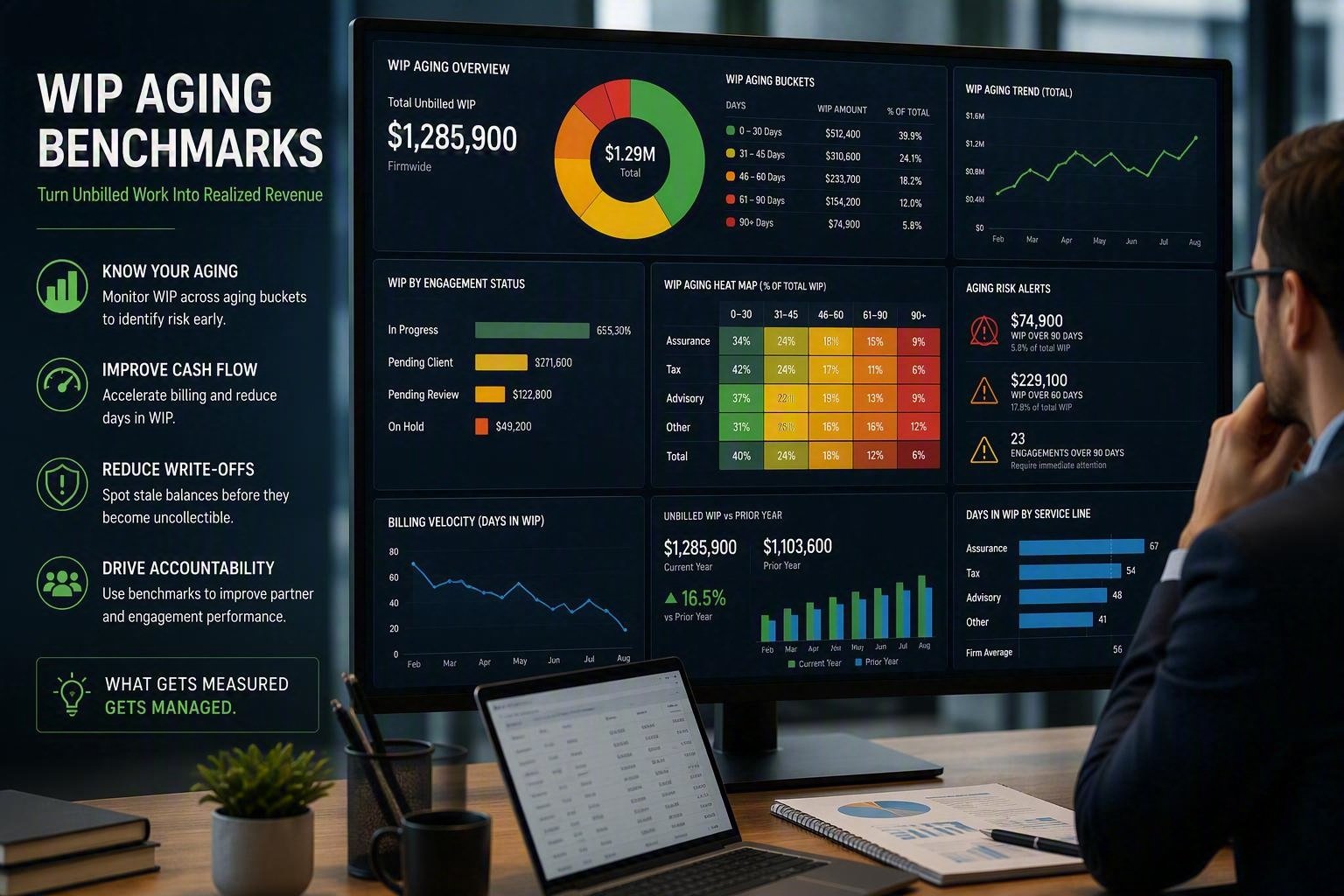
WIP aging dashboard for accounting firms

WIP Aging

Target: majority of WIP under 45 days; flag anything over 60.

WIP aging — a work in progress aging report, in the language most practice management systems use — is a leading indicator of billing risk. Firms that let WIP age past 60 days see higher write-down rates, because clients push back harder on invoices for work they don't remember clearly and partner review becomes harder to justify.

WIP Turnover Formula

WIP turnover (days) = average WIP balance ÷ average daily billings.

WIP turnover tells you something WIP aging doesn't: how many days of billings are sitting in unbilled WIP at any given time, across the whole book. A firm can have acceptable aging on paper while turnover is quietly climbing, because new work keeps entering faster than it's billed — a firm-wide velocity problem an aging report alone won't surface.

Unbilled WIP

Money already earned, not yet invoiced.

Unbilled WIP is work the firm has completed and could invoice today but hasn't. Left unmonitored, it becomes the primary source of both write-downs (as it ages past a client's memory of the engagement) and cash flow strain, since it's earned revenue the firm can't yet collect against.

Billing Velocity & Billing Cycle Time

Target: invoice within 0–14 days of work completion.

Billing velocity — also called billing cycle time — is the number of days from work completion to invoice. It directly affects both cash flow and realization rate: firms that invoice within 0–14 days collect at higher rates and generate fewer disputes, while billing lag beyond 30 days correlates strongly with higher write-down frequency.

WIP Management Best Practices

Weekly review beats month-end reconciliation.

Effective WIP management is a weekly habit, not a month-end cleanup: review aging movement by partner and service line, flag anything approaching 60 days before it crosses, and reconcile budget vs. actual hours on open engagements so scope creep gets caught before it inflates WIP further.

Time and Billing Dashboard

Push-button visibility replaces manual WIP pulls.

A time and billing dashboard connects directly to the system recording hours and invoices, so WIP aging, WIP turnover, and billing velocity update automatically instead of requiring a manual export before every partner review.

WIP & Billing Velocity Benchmark Reference Table
Metric Best-in-Class Target Warning Threshold Review Cadence
WIP Aging Majority under 45 days 60-day bucket growing Weekly aging movement
WIP Turnover Stable or declining days Rising trend over 2+ months Monthly
Billing Velocity / Cycle Time Invoice within 0–14 days Lag beyond 30 days Weekly
Budget vs. Actual Hours Within 10% of budget Over 20% variance Per engagement

FirmMetrics™: Push-Button WIP and Billing Velocity Dashboards

FirmMetrics™ delivers push-button WIP and job profitability dashboards, updated automatically from CCH Practice or Practice CS — surfacing WIP aging, WIP turnover, and billing velocity without manual report pulls or export cycles, so unbilled work is visible the moment it's ready to invoice.

For the full benchmark set across realization, utilization, WIP, and AR, see our Accounting Firm KPI Benchmarks guide.

WIP & Billing Velocity: Frequently Asked Questions

What is a good WIP aging target for an accounting firm?

Best-performing accounting firms keep the majority of WIP under 45 days and treat the 60-day bucket as an active intervention threshold. This holds at the service-line level too — a healthy firm-wide number can hide one service line's WIP quietly running past threshold.

What is WIP turnover and how is it different from WIP aging?

WIP turnover (in days) = average WIP balance ÷ average daily billings. It measures how many days of billings sit in unbilled WIP across the whole book, while WIP aging measures how old the oldest individual jobs are. A firm can have healthy aging while turnover climbs, because new work is entering faster than it's billed out — the two metrics catch different problems.

What is unbilled WIP and why does it matter?

Unbilled WIP is work the firm has completed but hasn't yet invoiced — revenue already earned but not yet converted to cash. Left unmonitored, it's the primary driver of both write-downs, since older work gets written down more, and cash flow strain, since the firm can't collect against work it hasn't billed.

What's a good billing velocity or billing cycle time benchmark?

Best-performing firms invoice within 0–14 days of work completion. Billing lag beyond 30 days is strongly correlated with higher write-down frequency, since clients push back more on older invoices and the connection to the work performed fades.